Story ID:
1012-0, 1009-0
Insert Image:
Banner Image:
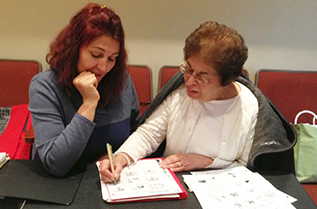
 Parin Dilgir is an English as a Second Language (ESL) teacher by profession and speaks confidently about the levels of literacy one needs to journey through to fully comprehend and speak the English language. “Speaking, reading, writing and listening are all part of literacy,” she says and the best way to teach them is through practical learning, games, drama and writing stories. Upon asking her to expand on this, Dilgir stresses the value of learning literacy in relevant ways. “Teach students what they need,” she says, so they can function when they shop, bank or look for a job. In this way there is a desire to learn because what they are learning is useful and valued. Dilgir listens to the needs of learners and motivates them to continue strengthening their literacy skills, until their grammar use is on par with those fluent in the English language. When asked what she has learned in the process, she quickly responds in Mandarin and Farsi, revealing the importance of nurturing relationships with her students by valuing their languages and the cultures from which they express themselves. Dilgir’s started her TKN assignment in 2010 and claims, “when I was first offered the assignment, I was so grateful I could deliver on my Nazrana”. TKN has enabled Dilgir to contribute in a profound way to nurturing literacy skills in the Jamat and thereby improving their quality of life and contribution to broader society. Her belief in the power of literacy and the best ways to cultivate it has been transferred to the TLC through her role as a TKN volunteer, thereby professionalizing the work of the Aga Khan Education Board.
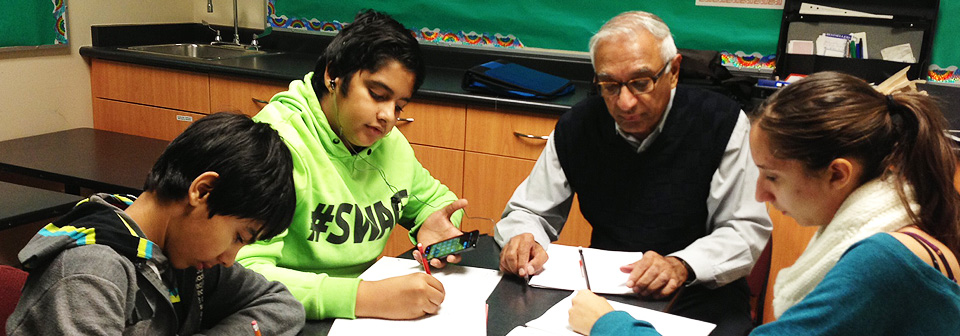
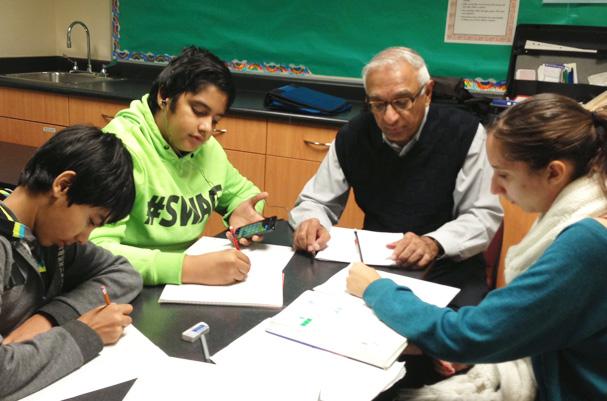
“In the past we didn’t have access to technology, only the simple calculator, and teaching was dependent on individually working through all the operations required. So it was necessary for students to show they fully understood concepts. Even as late as the ‘80s, one needed to sketch a graph by hand and first know the properties he or she was trying to graph. Now, all one has to do is enter an equation and a graph pops up. The emphasis has moved from developing the thinking behind graphing to graphing from information. Another change is the ability to refer students to ready-made tutorials on the computer whereby a teacher can monitor their progress remotely. That is fantastic – since to interact with students in the past I had to be physically proximate.”
“One student joined us about 1 year after I joined TLC. At the time he was in grade 10 and distracted. The following year I did not see him and I inquired about his absence. I learned he had gone back to Kabul. I was disappointed. Then I was pleasantly surprised when he returned to the TLC when he was in grade 12. This time he did not miss a single class and was studious and motivated, asking many questions. I learned that he has been accepted into IB United World College of the Pacific. How was it that he was lacking in focus and then transformed into understanding the content, and suddenly shining? I was really happy about that!”